2026-10-23 ·
Preventing Mold Growth From AC Condensation In Littlerock
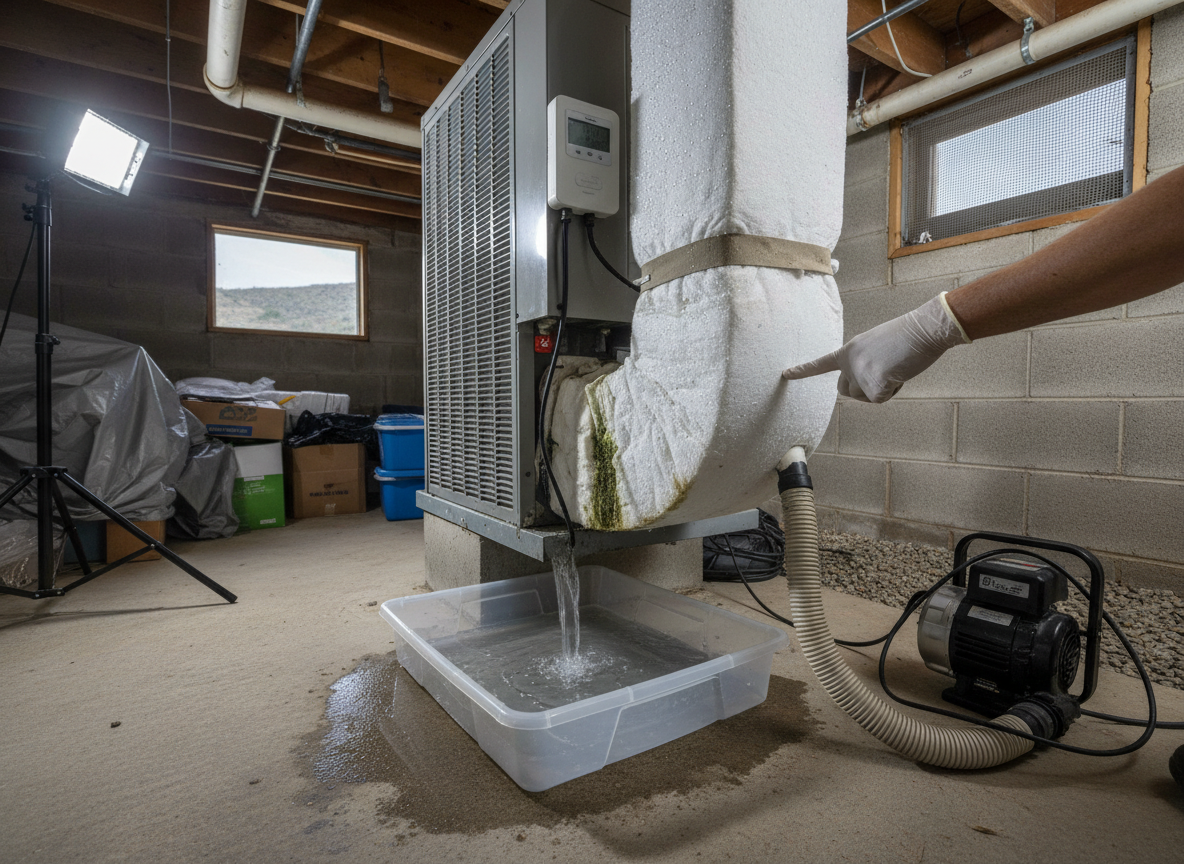
In Littlerock's desert climate, preventing mold growth from AC condensation requires keeping condensate lines clear, insulating exposed ducts, and ensuring attic ventilation moves moist air out before it settles on cool surfaces. Homes here, many built decades ago near Littlerock Dam and Littlerock Community Park, commonly have older ductwork and limited attic insulation that trap moisture during the long cooling season. When temperatures swing from daytime highs above 100 degrees to cooler nights, the temperature differential on metal lines and coils produces steady drip that feeds mold colonies inside walls and ceilings. Regular checks of the drain pan and line slope prevent standing water that would otherwise drip into framing or insulation. Homeowners in Palmdale and Lancaster report the same pattern because the shared high-desert conditions push AC systems harder than coastal parts of Los Angeles County.
How Desert Summers Create Condensation Risks
Littlerock summers push AC units to run 12 or more hours daily, chilling refrigerant lines while outdoor humidity spikes during rare monsoon events. The resulting condensation forms on uninsulated suction lines and drip pans that sit in attics or crawl spaces common in local single-story homes. When the cool air meets warm roof decking or wall cavities, moisture migrates into drywall and cellulose insulation, creating conditions for growth within 48 hours. Older homes near 7704 Pearblossom Hwy often lack modern vapor barriers, so the same drip that would stay contained elsewhere travels into framing. Checking the line slope and clearing the outlet at the exterior wall every spring cuts the main water source before summer peaks.
Inspecting Ducts and Attic Spaces for Early Signs
Walk the attic twice a year and shine a light along duct seams and the condensate line route. Look for darkened insulation, water stains on rafters, or a musty smell that intensifies when the system starts. In Littlerock homes, ducts often run through unconditioned space where summer heat loads the outer jacket while the interior stays cold, guaranteeing drip points at every joint. Pay special attention to flex duct sections that sag and trap moisture. If you find discolored spots larger than a quarter or feel damp insulation, schedule professional assessment rather than attempting to dry the area yourself. Inspecting Crawl Spaces For Hidden Mold In Littlerock Houses covers similar hidden moisture paths that connect to AC systems.
Practical Steps to Reduce Moisture Load
Set the thermostat no lower than 78 degrees during peak heat to lessen the temperature differential on lines. Replace or clean filters every 30 days so the evaporator coil stays at design temperature instead of icing over and then flooding the pan. Add closed-cell insulation sleeves to any exposed suction line longer than three feet and seal duct joints with mastic rather than tape that fails in desert heat. Ensure the attic has at least one square foot of ventilation per 150 square feet of attic floor so moist air exits before it condenses on ducts. These steps address the root conditions that turn routine AC operation into a mold source in Los Angeles County desert homes.
When Professional Evaluation Becomes Necessary
Persistent musty odors after filter changes, visible water marks on ceilings, or allergy symptoms that improve when the AC runs point to hidden growth along the condensate path. At that stage, surface cleaning will not reach mold inside insulation or behind drywall. mold remediation near me and ventilation mold remediation services address both the moisture source and any colonies already established. What Influences The Cost Of Mold Remediation In Littlerock outlines typical scope for duct-adjacent jobs so homeowners can plan next steps without delay.