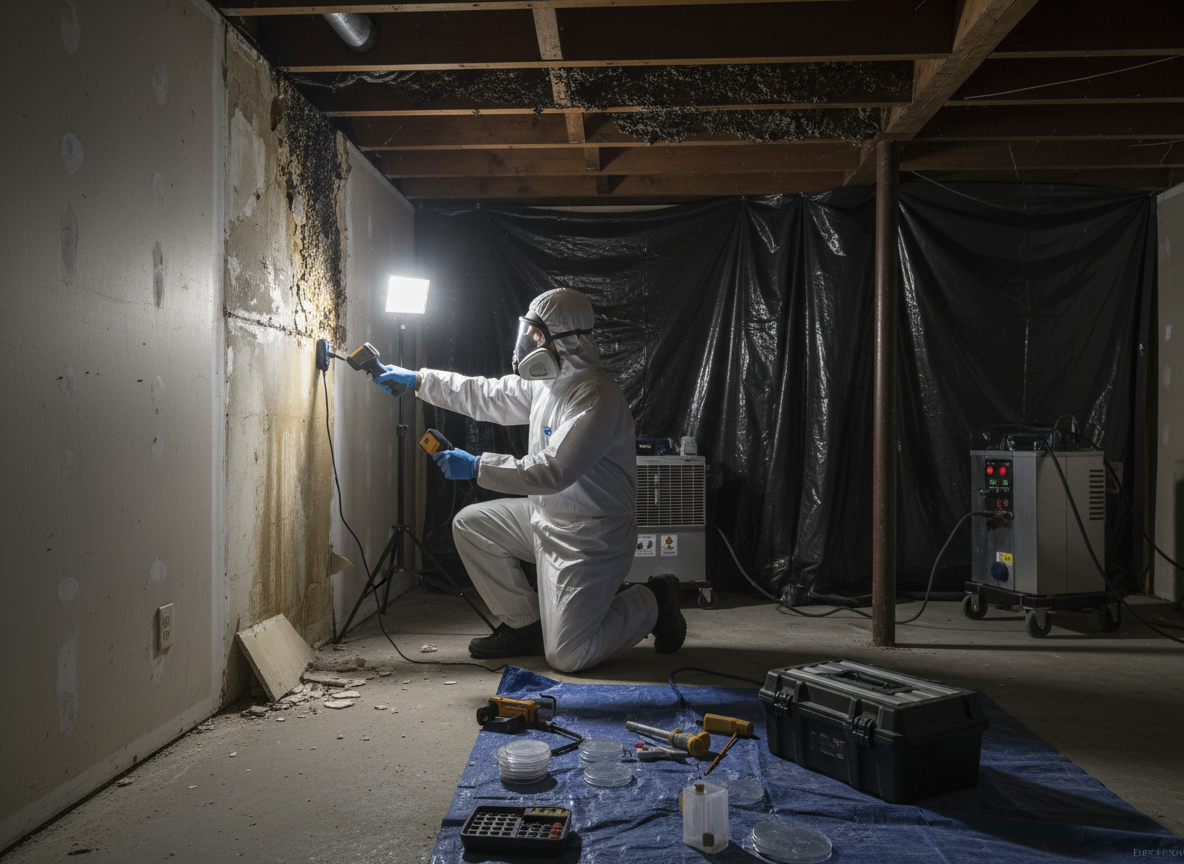
Littlerock sits in the high desert of Los Angeles County where hot summer days and cool winter nights create daily temperature swings that drive condensation inside walls and under floors. Older single-story homes built near Littlerock Dam and Littlerock Community Park often have crawl spaces and attics that trap this moisture, especially when cool air from the mountains meets warmer interior air. During inspection we use moisture meters and thermal imaging to map these hidden pockets before any growth becomes visible on drywall or baseboards.
Many properties in the area draw water from private wells or sit on sandy soil that drains unevenly after rare but heavy winter rains. This combination leaves damp soil against foundation stem walls, feeding mold on subfloor sheathing and joists. We pay special attention to bathrooms and laundry rooms where exhaust fans vent directly into attics, a common setup in homes between Littlerock and Palmdale. Finding these entry points early prevents the need for larger remediation later when spores spread through the HVAC system.
Inspection reports include photos, moisture readings, and a clear map of affected materials so homeowners in Lancaster or Palmdale can see exactly what requires attention. We also note ventilation gaps around windows and doors that allow desert dust and spores to enter during wind events common in the Antelope Valley. The goal is to give a complete picture before any cleaning or removal work begins.
Because Littlerock experiences low annual rainfall yet sudden monsoon bursts, inspectors must check exterior grading around every foundation. Poor drainage from the surrounding foothills often directs water toward crawl-space vents, creating the exact conditions that allow mold to establish on insulation and framing. This local pattern shows up repeatedly in homes built before modern vapor-barrier requirements.
Technician insight
In Littlerock the thing that catches most people out with Mold Inspection is the daily temperature swing between hot days and cool nights that leaves condensation on the underside of roof sheathing in homes near the dam. Homeowners often miss it because the moisture dries by midday, yet the mold keeps growing in the attic insulation.
Hidden Attic Moisture After Winter Rain
A homeowner near Littlerock Community Park noticed a musty smell after a rare heavy rain. Inspection found condensation trapped under the roof deck from rapid nighttime cooling. We mapped the damp zones, took samples, and explained targeted ventilation fixes that stopped further growth without opening the entire attic.
How it works
- 1
Initial Walk-Through
We examine every room, attic, and crawl space while noting visible stains, musty odors, and past water events reported by the owner.
- 2
Moisture Mapping
Handheld meters and infrared cameras locate elevated moisture levels behind walls, under floors, and in ceiling cavities common in Littlerock construction.
- 3
Air and Surface Sampling
Samples are collected from suspect areas and sent to a lab to identify mold types and concentrations present in the home.
- 4
Report and Recommendations
A written report details findings with photos and a prioritized list of next steps tailored to desert climate conditions in Los Angeles County.
Pricing
Pricing varies with home size, number of samples, and accessibility of crawl spaces and attics typical in the area.