Littlerock homes built decades ago often sit on slabs or have crawl spaces that trap condensation when cool winter nights follow hot summer days. A single roof leak near the Littlerock Dam or an AC drip line failure can push spores behind stucco or into attic insulation within hours. Our crews respond within the same day because the dry air here evaporates surface water fast, leaving moisture hidden inside walls where it feeds growth along wood framing and drywall paper.
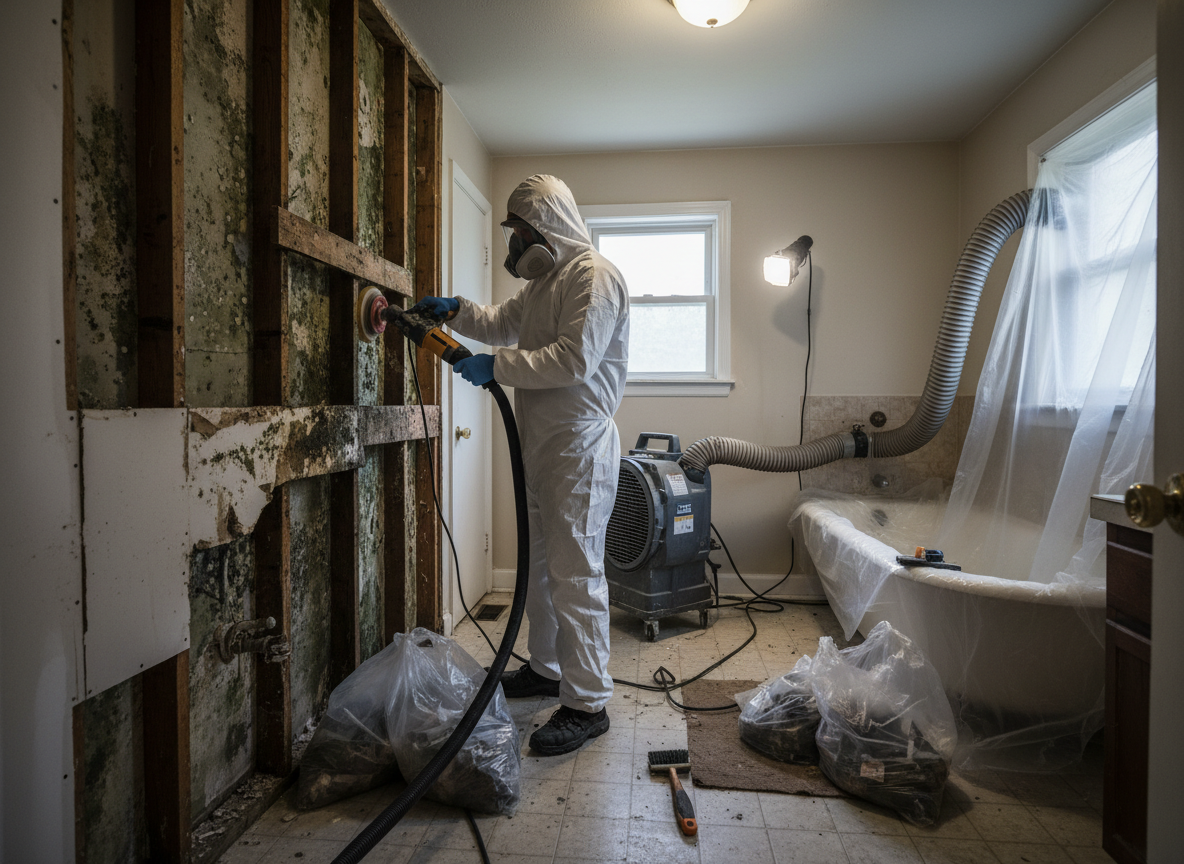
We use negative-air machines and physical barriers to keep spores from drifting into living spaces, especially important in single-story ranch houses common between Littlerock Community Park and Highway 138. After removing affected materials we run commercial dehumidifiers and air movers until moisture readings drop below 12 percent on both wood and drywall. Skipping this step in the desert’s low humidity often leads to callbacks when residual dampness reactivates spores weeks later.
Local building practices sometimes include older fiberglass batts that hold water against sheathing. We cut back insulation at least 18 inches past visible growth and dispose of it in sealed bags before any reconstruction. Homeowners in Lancaster and Palmdale frequently ask about fogging; we explain it only treats airborne spores and does nothing for the source inside cavities, so we always combine it with physical removal when needed.
Technician insight
In LITTLEROCK the thing that catches most people out with 24 hour mold removal is how a winter rainstorm near the dam can soak stucco and then the desert sun bakes the exterior dry while the inside stays wet for weeks behind the paper facing on drywall.
Attic Growth After Roof Leak
A Littlerock homeowner noticed musty air after cool nights followed a brief storm. Inspection found saturated insulation and mold along rafters above the living room. We removed the wet materials, dried the sheathing, and ran negative air for two days. Clearance samples passed and the family returned without further issues.
How it works
- 1
Emergency Assessment
Technician arrives within hours, uses moisture meters and borescopes to map hidden growth in walls, attics, and crawl spaces typical of Littlerock housing stock.
- 2
Containment Setup
Plastic barriers and negative air establish sealed work zones so spores do not migrate to unaffected rooms during removal.
- 3
Source Removal
Affected drywall, insulation, and wood are cut out and bagged; surfaces are HEPA-vacuumed and treated with EPA-registered antimicrobials.
- 4
Drying and Verification
Industrial drying equipment runs until readings confirm safe moisture levels; post-remediation air samples confirm clearance before barriers come down.
Pricing
Cost depends on square footage affected, depth of hidden growth, and whether crawl spaces or attics require extra access time in Littlerock homes.