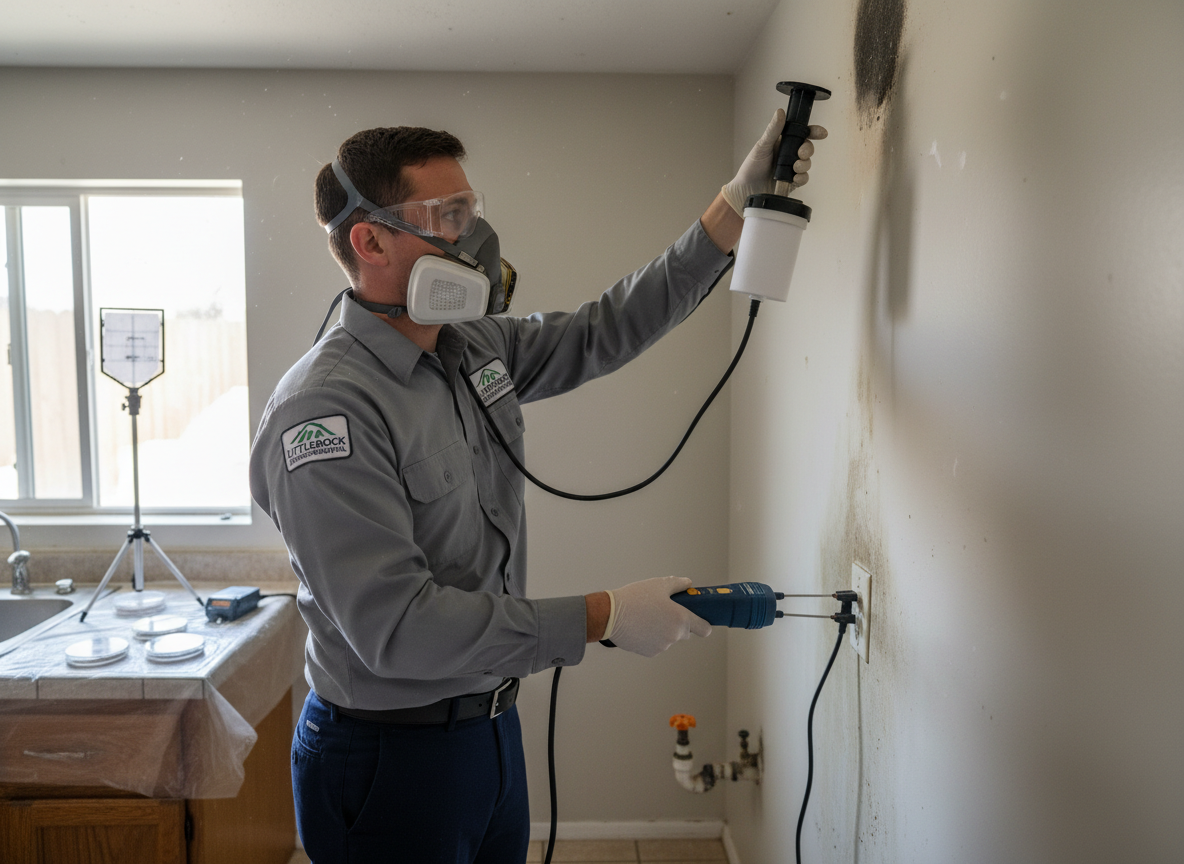
In Littlerock's desert climate with hot summers and cool winters, mold often appears in crawl spaces and attics where temperature swings create condensation on older ductwork and insulation. Homes built before the 1990s near Littlerock Community Park and along Pearblossom Highway frequently have unsealed foundations that allow moisture from occasional winter rains to linger. Air sampling and surface testing reveal hidden growth behind drywall or in HVAC systems that residents miss because the dry air masks musty odors most of the year.
Testing protocols account for the area's proximity to the Littlerock Dam, where irrigation runoff and seasonal humidity spikes can affect soil moisture around slab foundations common in Lancaster and Palmdale border properties. Technicians use calibrated pumps for spore counts and moisture meters calibrated for local soil conditions to distinguish between desert dust and actual microbial growth. Edge cases include false positives from agricultural dust in the Antelope Valley and hidden mold in mobile homes that make up much of the housing stock here.
Los Angeles County building codes require documentation of moisture sources before any remediation plan, so reports include photos, lab results, and recommendations for ventilation upgrades suited to extreme summer heat. Homeowners often overlook how evaporative coolers, still used in many Littlerock properties, can distribute spores if filters are neglected during the transition to cooler months.
Results guide targeted follow-up rather than whole-house treatments, saving time on properties where only one bathroom or the garage shows elevated readings due to poor grading near the dam's watershed.
Technician insight
In Littlerock, the thing that catches most people out with Air quality and mold testing is assuming dry desert air means no mold when in fact cool winter nights and evaporative coolers in homes near the dam create hidden condensation behind walls that only shows up on spore counts.
Hidden Growth in Palmdale Road Home
A homeowner near Littlerock Dam noticed allergy spikes during cool evenings but no visible mold. Testing revealed elevated aspergillus in the attic linked to a small roof leak and poor attic ventilation common in 1980s builds. We sampled three zones, confirmed the source, and provided a targeted report that allowed the owner to fix the leak before growth spread into living spaces.
How it works
- 1
Initial Consultation
Discuss symptoms and property history over the phone or at 7704 Pearblossom Hwy to determine sampling locations.
- 2
On-Site Inspection
Walk-through of interior, attic, crawl space, and HVAC system with moisture mapping and visual checks for water intrusion points.
- 3
Air and Surface Sampling
Collect spore trap samples indoors and outdoors plus tape lifts or swabs from suspect areas for lab analysis.
- 4
Report Delivery
Provide written results with lab findings, photos, and specific next-step recommendations within 48 hours.
Pricing
Pricing varies by number of samples and property size; call 24/7 for an upfront quote based on your Littlerock address.