Littlerock sits in the high desert of Los Angeles County where hot summer days and cool winter nights create repeated condensation cycles inside crawl spaces. Many homes built along Pearblossom Highway and near Littlerock Community Park have dirt-floor crawl spaces with minimal ventilation, allowing moisture from occasional rains or irrigation runoff to linger. This environment supports mold growth on floor joists and insulation, especially in properties close to the Littlerock Dam where soil moisture can migrate under foundations during cooler months.
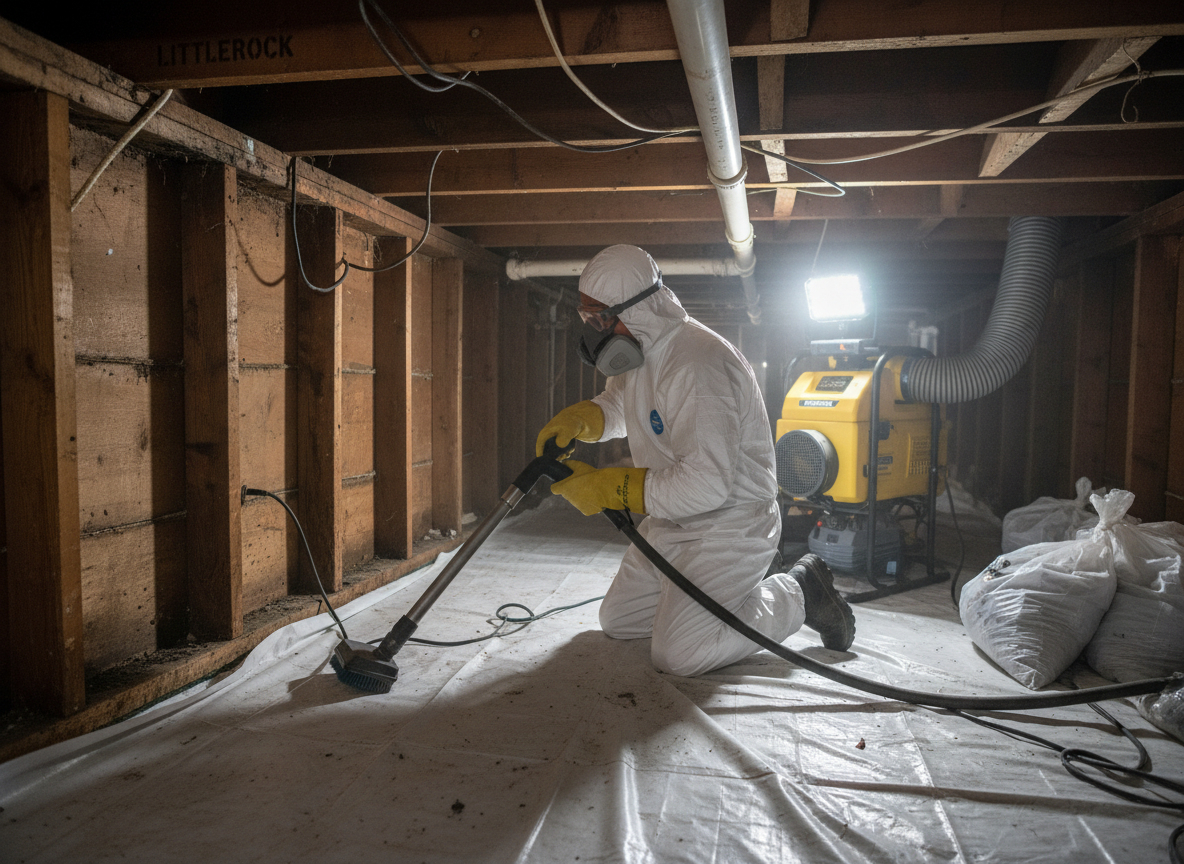
We begin every job with a moisture meter survey and borescope inspection to map hidden growth behind vapor barriers or along rim joists. Containment uses 6-mil poly sheeting sealed to the foundation walls, followed by HEPA vacuuming and removal of affected insulation. Antimicrobial treatments are applied only to structural wood after physical cleaning, and we install dehumidification until relative humidity stays below 55 percent. In Palmdale and Lancaster border homes we often add vapor barrier upgrades because the alkaline desert soil can wick additional moisture upward.
Homeowners frequently overlook crawl space access doors that leak air from the exterior, allowing spores to re-enter after treatment. We seal these openings with insulated, gasketed doors and route any sump discharge away from the foundation. Los Angeles County building codes require proper ventilation calculations when adding mechanical drying, so we document airflow changes before leaving the site. This approach prevents recurrence during the next winter cooling period when indoor-to-crawl temperature differentials peak.
Technician insight
In LITTLEROCK, the thing that catches most people out with crawl space mold removal is the rapid temperature drop after sunset that pulls moisture out of the alkaline soil and into unvented dirt crawl spaces under 1960s-1970s ranch homes near the Littlerock Dam.
Crawl Space Mold Near Pearblossom Hwy
Homeowner reported persistent musty odor in a single-story house east of Littlerock Community Park. Inspection found active mold on floor joists from condensation driven by desert night cooling and poor original grading. We contained the space, removed insulation, cleaned structural members, and added sealed vapor barrier sections. Humidity stabilized and the odor did not return during the following winter.
How it works
- 1
Initial Assessment
We inspect the crawl space from the 7704 Pearblossom Hwy base, mapping moisture sources tied to Littlerock terrain and checking for hidden growth along foundation walls.
- 2
Containment Setup
Negative air machines and poly barriers isolate the work area to protect living spaces in nearby homes off Littlerock Community Park.
- 3
Removal and Cleaning
Physical removal of moldy materials followed by HEPA filtration and antimicrobial application to joists and subflooring.
- 4
Drying and Prevention
Dehumidification until levels stabilize, plus vapor barrier repairs suited to desert soil conditions around the Littlerock Dam area.
Pricing
Pricing varies by crawl space size, moisture source, and material removal needs; we provide upfront quotes after on-site assessment.