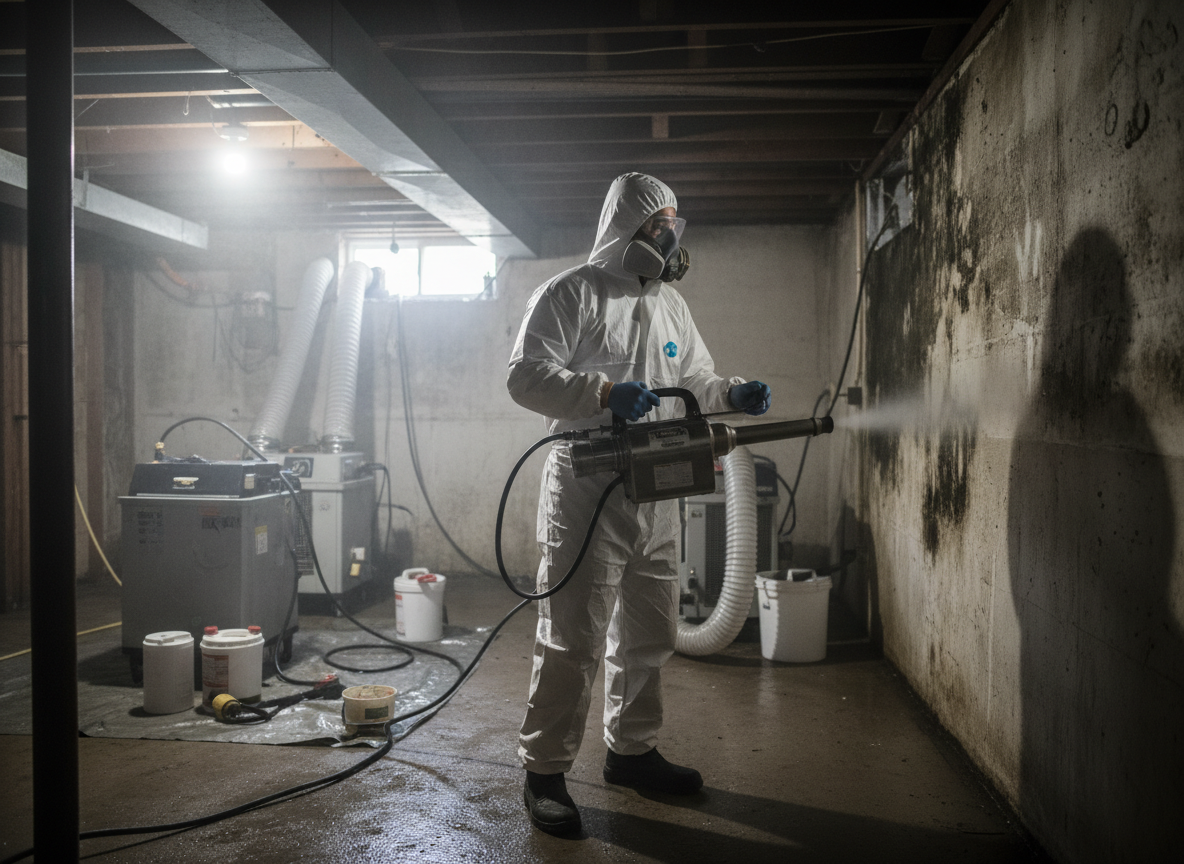
Littlerock sits in Los Angeles County under a desert climate with hot summers that push warm air into attics and cool winters that create condensation on cooler surfaces. Older single-story homes near Littlerock Dam and Littlerock Community Park often have vented crawl spaces where soil moisture mixes with poor airflow, allowing mold to grow behind baseboards and under flooring. Odor removal here requires locating the actual colony rather than masking smells, because the dry heat quickly carries volatile organic compounds through HVAC returns into living areas.
Standard bleach wipes fail on porous materials like drywall and insulation common in Palmdale-adjacent properties, leaving residual odors that return within weeks. Technicians use negative air machines with HEPA filtration and hydroxyl generators sized for the square footage to break down odor molecules at the source. Edge cases include slab-on-grade homes where plumbing leaks under tile create hidden pockets that standard fans cannot reach without removing sections of flooring.
Seasonal swings matter: after winter rains, water pools near foundations in low-lying areas around Lancaster Road, feeding subsurface growth that only shows as a persistent earthy smell in closets. Proper odor removal includes post-treatment air sampling to confirm levels drop below detectable thresholds before sealing surfaces. Homeowners who skip verification often re-contaminate the space when they resume normal HVAC use.
Technician insight
In LITTLEROCK, the thing that catches most people out with odor removal mold is how the desert heat pulls hidden moisture from the soil under older crawl spaces near the dam, letting smells travel through floor joists even after surface mold is gone; homeowners often repaint instead of addressing the actual vapor path.
Hidden Crawl Space Odor Near Littlerock Community Park
Homeowner reported a persistent musty smell in bedrooms that worsened at night. Inspection found active growth on subfloor joists from seasonal condensation under the house. Crew contained the space, applied targeted oxidizers, and ran air scrubbers for 48 hours. Follow-up sampling showed levels below detection and the smell did not return.
How it works
- 1
On-Site Inspection
Technician maps moisture readings and odor sources throughout the home using infrared and air sampling tools.
- 2
Source Containment
Affected zones are isolated with plastic sheeting and negative air to prevent cross-contamination during treatment.
- 3
Odor Neutralization
EPA-registered oxidizers and air scrubbers break down mold VOCs in walls, attics, and crawl spaces.
- 4
Clearance Testing
Independent air samples confirm odor-causing particles are reduced before any restoration work begins.
Pricing
Upfront quotes provided after inspection; cost varies with square footage, hidden extent, and whether structural materials must be removed.