Littlerock sits in a high-desert pocket of Los Angeles County where hot summers drive heavy air-conditioner use and cool winters bring occasional rain that soaks older ranch homes built along Pearblossom Highway. These conditions create hidden moisture behind walls and under slabs when condensate lines clog or irrigation ditches near the Littlerock Dam leak into crawl spaces. Professional mold removal starts with moisture mapping using thermal cameras because visible growth is rarely the full extent of the problem in these single-story structures with shallow foundations.
Many homes in Littlerock and the adjacent Palmdale and Lancaster areas still rely on original ductwork and evaporative coolers that trap dust and hold humidity during monsoon bursts. Removing mold from these systems requires isolating the HVAC before any demolition so spores do not spread through the rest of the house. Technicians also check soil contact at the base of stucco walls, a common entry point when winter rains pool against the foundation without proper grading.
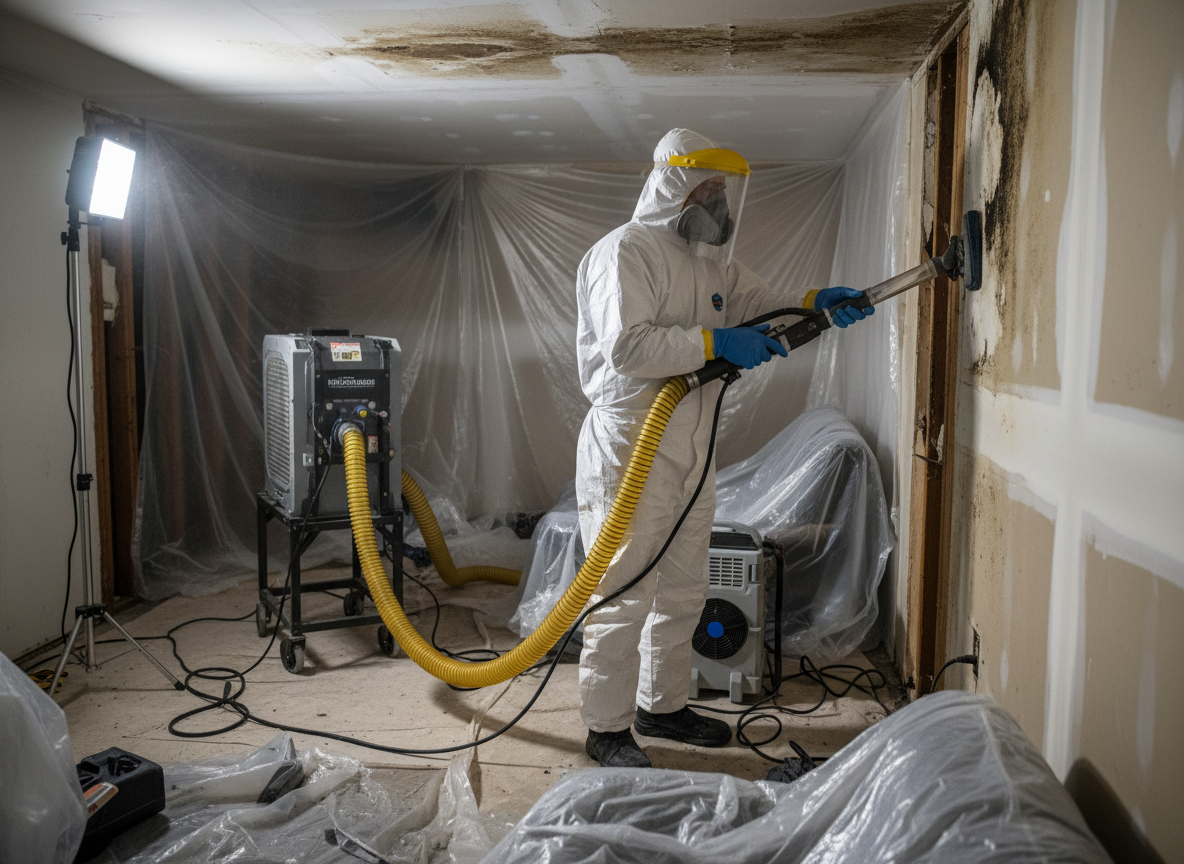
Edge cases appear regularly near Littlerock Community Park where older mobile homes sit on dirt pads with minimal vapor barriers. In these properties, mold often travels along plumbing runs under the floor, requiring removal of sections of subfloor rather than simple surface cleaning. Containment must be negative-air sealed to the exterior because desert winds can carry spores once the home is opened up.
After source removal, drying protocols follow IICRC S520 guidelines adapted for low-humidity air; dehumidifiers run shorter cycles but still require daily moisture readings to confirm wall cavities reach safe levels before reconstruction begins.
Technician insight
In LITTLEROCK, the thing that catches most people out with professional mold removal is irrigation water from the orchards and ditches near Littlerock Dam seeping under slab foundations of 1970s homes along Pearblossom Hwy. Homeowners assume the desert air will dry everything, yet the trapped moisture under the slab keeps feeding growth long after the visible spot is gone.
Hidden Slab Leak Near Littlerock Community Park
A homeowner in a 1978 ranch house noticed musty odor after a cool spell. Inspection found a cracked irrigation line allowing water to travel under the slab from the park side. We isolated the room, removed base cabinets and flooring, dried the sub-slab area with targeted fans, and confirmed clearance before reinstalling finishes.
How it works
- 1
Inspection and Moisture Mapping
Technicians arrive 24/7 and use moisture meters plus thermal imaging to locate hidden water near irrigation lines or AC drains in Littlerock homes.
- 2
Containment Setup
Plastic barriers and negative-air machines isolate affected rooms so spores stay out of living spaces common in single-story desert construction.
- 3
Source Removal
Damaged drywall, insulation, and duct sections are cut out and bagged; any growth tied to leaks from nearby Littlerock Dam runoff is addressed at the root.
- 4
Drying and Clearance Testing
Industrial air movers and dehumidifiers dry cavities to below 15 percent moisture; air samples confirm safe spore levels before walls are closed.
Pricing
Cost depends on square footage affected, whether HVAC or crawl-space work is required, and any hidden damage discovered during inspection.