Littlerock sits in the high desert of Los Angeles County where hot summers and cool winters create specific moisture patterns that drive toxic mold growth. Irrigation from nearby orchards and occasional winter storms often push water into crawl spaces and behind stucco on homes built from the 1950s through the 1980s. These structures frequently lack modern vapor barriers, allowing black mold to colonize drywall and framing before residents notice musty odors or health symptoms.
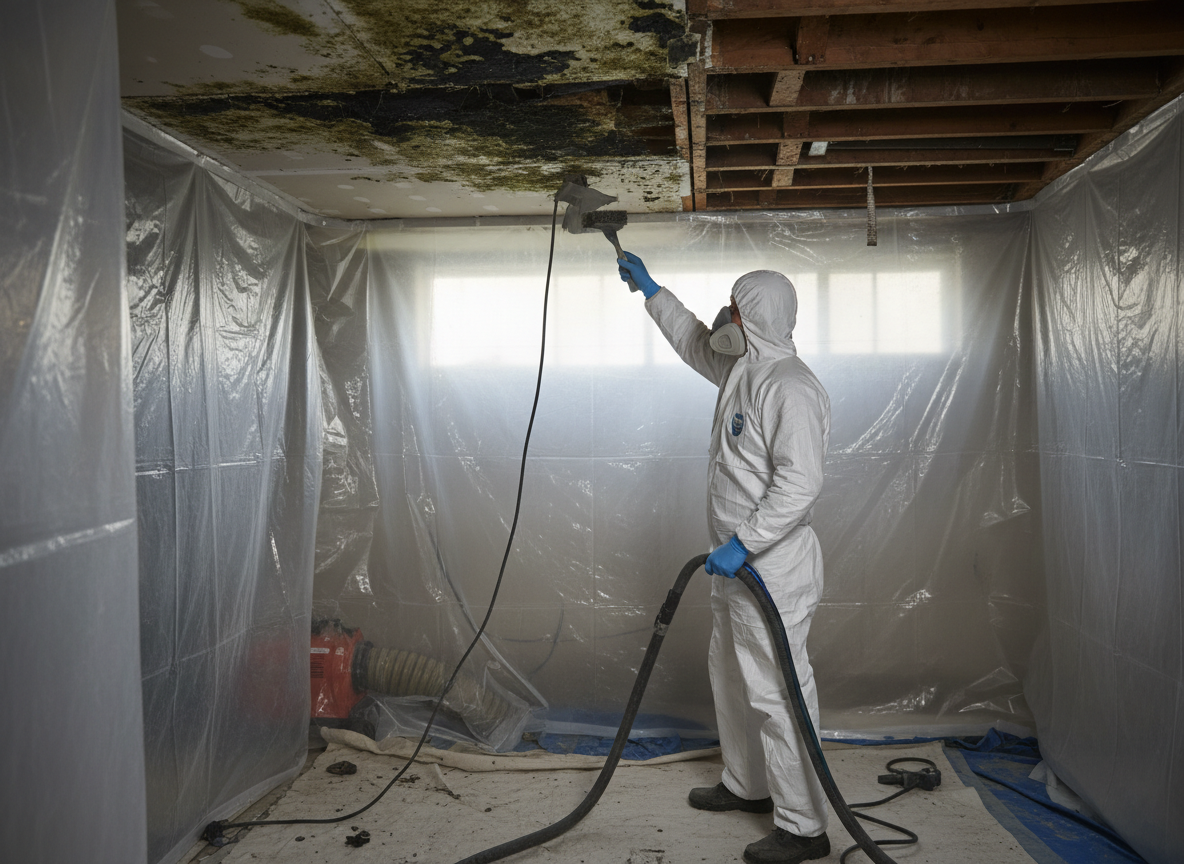
Removal work here starts with moisture mapping using thermal imaging to locate hidden water from roof leaks or AC condensate lines that pool near Littlerock Community Park neighborhoods. Containment uses negative air machines to prevent spores from spreading into the dry desert air outside. Affected materials are cut out at least 18 inches beyond visible growth, followed by HEPA vacuuming and antimicrobial treatment on remaining surfaces. Final drying relies on industrial dehumidifiers because the low ambient humidity can mask lingering moisture inside wall cavities.
Homeowners along Pearblossom Highway often discover toxic mold after monsoon-style rains overwhelm older gutters and direct water toward foundations. We address these edge cases by checking soil grading around the home and ensuring proper ventilation in attics where temperature swings cause condensation on roof sheathing. All removed debris is bagged and disposed of according to Los Angeles County waste guidelines rather than standard landfill routes.
Technician insight
In Littlerock, the thing that catches most people out with toxic mold removal is hidden moisture trapped behind stucco after winter rains near the Littlerock Dam; the desert air dries the surface fast so homeowners think the problem is gone while the cavity stays wet.
Hidden Mold After Winter Leak
A homeowner near Littlerock Community Park noticed a musty smell in the laundry room after cool-season rains. Inspection revealed water had entered through a roof valley and traveled behind exterior stucco into the wall cavity. We contained the room, removed the affected drywall and insulation, treated the framing, and dried the space over three days. Clearance testing passed and the family moved back in without further issues.
How it works
- 1
Initial Assessment
We arrive at the Littlerock property and use moisture meters plus thermal cameras to identify all affected zones without disturbing surfaces.
- 2
Containment Setup
Plastic barriers and negative air pressure isolate the work area so spores do not migrate into clean sections of the home or the dry outdoor air.
- 3
Removal and Cleaning
Contaminated drywall, insulation, and trim are removed, followed by HEPA vacuuming and surface treatment of exposed framing.
- 4
Drying and Verification
Industrial equipment dries the space while we retest moisture levels; clearance testing confirms the area meets safe standards before reconstruction.
Pricing
Upfront quotes provided after inspection; final cost depends on square footage affected and access challenges common in older Littlerock homes.